We make carmoving fast & simple

We make carmoving fast & simple

Vehicle logistics is becoming increasingly digital. Today transport operations are no longer merely commissioned on an individual basis; instead, they are planned, managed, documented, and analyzed. This establishes a new foundation: structured data, transparent processes and digital workflows capable of providing better support for operational decision-making.
The next step in this evolution involves making this information even more easily accessible and this is precisely where artificial intelligence comes into play.
At carmovia we are currently in the testing phase for a new AI-driven implementation. Behind the scenes, systems such as Claude and ChatGPT are being integrated to capture, categorize, and operationalize logistical information with greater speed and efficiency.
In transport logistics a significant portion of the effort involved does not stem solely from the actual transportation itself. A large part of the daily workload lies in coordination: information must be verified, queries resolved, status updates categorized, documents checked, and next steps prepared.
This complexity becomes particularly palpable when managing numerous parallel vehicle movements. One vehicle may have already been collected, while another is still awaiting complete data. One transport might involve specific handover requirements, while another faces a delay. Simultaneously customers, partners, and internal teams must be kept up to date.
This is precisely where AI can provide support in the future. It can consolidate information from various process stages, identify interdependencies and relieve operational teams by enabling them to gain an overview more quickly.
Integrating AI systems such as Claude and ChatGPT does not mean that operational decisions will be fully automated. Rather, the goal is to deploy digital assistance precisely where it generates genuine added value within day-to-day operations.
Such systems can structure vast amounts of information, summarize content in an easily digestible manner, and provide indications as to which processes require particular attention. They can assist in deriving a clearer assessment from individual data points.
For instance: When multiple shipments are in transit simultaneously, teams frequently need to verify which processes are proceeding according to schedule, where information is missing, and which cases should be prioritized. AI can organize this information clearly, thereby helping teams identify the relevant points more quickly.
A classic challenge in vehicle logistics is the sheer volume of individual status information. Every vehicle movement generates its own specific data points: pickup location, destination, time window, vehicle condition, transport mode, documentation, contact persons, partner status, and any potential special requirements.
When this information is digitally consolidated and clearly structured, it establishes a valuable foundation for improved operational control. This is precisely where AI comes into play: it does not replace existing digital infrastructure, but rather makes available information more quickly accessible, easier to understand and more readily usable in day-to-day operations.
In this way, a clearer overall assessment can be derived from a multitude of individual status points:
Which shipments are proceeding as planned?
Where is information still missing?
Which delays could become critical?
Which customers should be proactively informed?
Which processes require manual review?
Thus AI does not become a substitute for dispatching or customer service, but rather a supporting layer situated between data, systems, and humans.
AI can also provide practical value when it comes to recurring inquiries. In vehicle logistics, similar types of information are frequently required: the current status of a shipment, documentation details, pending queries, relevant time windows, or specifics regarding particular process steps.
Users who leverage carmovia comprehensively - including the integration of their own transport partners - are already consolidating this data today within a central digital infrastructure. In the future, AI-driven support can build upon this foundation, helping to make existing information actionable even faster, contextualize it clearly, and prepare it for easy access by various teams.
This can enhance the consistency of internal workflows and alleviate the workload on operational teams—particularly when numerous shipments are being coordinated simultaneously or when multiple departments are working with the same information.
Another area of application lies in the analysis of logistics data. After all, digital transport processes generate valuable information: Which routes occur most frequently? Where do delays regularly arise? Which locations entail a particularly high coordination effort? Which modes of transport are particularly efficient? Where can processes be simplified?
Such questions are particularly relevant for companies with high vehicle volumes. AI can help not only to collect data but also to analyze it in a more comprehensible manner. This yields insights that can be valuable for operational planning, process improvement, and strategic decision-making.
The crucial difference lies in the fact that information is not merely displayed, but contextualized. Data is transformed into meaningful connections. And from these connections emerge better foundations for decision-making.
Crucially, AI realizes its full value only when built upon a robust digital infrastructure. Without clean data, clear processes, and reliable system logic, artificial intelligence remains merely a theoretical promise.
In vehicle logistics, simply automating the output of information is not enough; the information must be accurate, traceable, and operationally actionable. Reliability is paramount—particularly regarding transport operations, time windows, customer communication, and partner coordination.
Therefore, the digital foundation is critical: transport processes must be structured and accurately mapped, status information meticulously maintained, and relevant data made accessible. Only then can AI provide meaningful support.
At carmovia we do not view AI as a substitute for personal care, operational experience or logistical expertise. Assessment, prioritization and communication remain exactly where experience matters most: in human hands.
AI can prepare, structure, summarize, and provide guidance. It can streamline routines and reduce complexity. However, it cannot replace the intuition required to navigate operational nuances, customer needs or unique transport requirements.
Particularly in vehicle logistics there are many instances where experience remains decisive - such as specific pickup conditions, tight time windows, complex handovers or individualized client demands. In these situations, human judgment and accountability remain indispensable.
Our current testing phase represents a crucial step toward a vehicle logistics system that is not merely digitally mapped, but increasingly supported by intelligent capabilities.
By integrating Claude, ChatGPT and other AI-driven approaches, we are exploring how operational information can be made even more readily usable in the future. Our deliberate focus here is not on short-term automation at any cost, but rather on providing meaningful support for real-world day-to-day operations.
For as the volume of vehicle movements, locations, partners and process data continues to grow, the need becomes ever more critical for an infrastructure that does not merely document, but actively assists in understanding and managing these complex operations.
The future of vehicle logistics lies not solely in more data or more digital systems. What matters most is how easily this information can be utilized.
AI can help reduce operational complexity, process information more rapidly and provide targeted support to teams in their day-to-day work. Systems like Claude and ChatGPT open up new possibilities in this regard - particularly when integrated with existing digital infrastructure.
For carmovia, this represents a logical next step: moving from digitally managed vehicle logistics toward intelligent support for daily operations.

carmovia is currently testing a new AI-powered support system utilizing Claude and ChatGPT. This article demonstrates how artificial intelligence in vehicle logistics can help make existing transport data actionable more quickly, present operational processes in a more comprehensible manner, and provide targeted relief to teams in their day-to-day operations—without replacing human experience or personal oversight.
Read
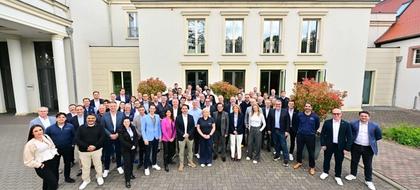
armovia attended the CARA Europe Spring Meeting 2026 and the Used Vehicle Retail Summit 2026 by Fleet Europe in Frankfurt. As a CARA member, carmovia joined valuable discussions within the European remarketing network and introduced the company during the member introduction session, represented by Colin. Following the CARA meeting, carmovia participated as a Gold Partner at the Used Vehicle Retail Summit, where conversations focused on used EV growth, digital transformation, customer expectations and the future of used vehicle retail across Europe.
Read

The fleet and mobility industry is undergoing profound change. Digitalisation, increasing complexity, sustainability requirements, and rising customer expectations are reshaping how vehicle logistics operates — and how it is led. The latest Global Fleet eBook “Inspiring Leaders Shaping the Future of Fleet” brings together leadership perspectives from across the industry, focusing not on quick fixes, but on how leaders navigate uncertainty, responsibility, and long-term transformation. One of these perspectives comes from our CEO Umut Dasdemir, who reflects on leadership shaped by entrepreneurship, operational responsibility, and continuous transformation.
Read